

Key Takeaways
Where the 3,000-mile rule came from
The 3,000-mile oil change interval was reasonable advice decades ago. Engines of that era ran on conventional mineral oil, had looser tolerances, and lacked the metallurgical precision of modern powertrains. Quick-lube shops popularized the number because it was a simple, conservative rule that kept business steady.
Today, the rule survives mainly through habit and marketing. Most vehicles manufactured after 2000 use tighter engine tolerances, better filtration systems, and either full-synthetic or synthetic-blend oil that holds up far longer than the conventional oil the 3,000-mile rule was built around. Following the old rule on a modern car does not cause harm, but it does waste money and oil.
Common myths about oil changes, corrected
Several persistent beliefs drive families to change their oil too often or, occasionally, not often enough. The pairs below address the most common ones.
Myth
You should change your oil every 3,000 miles, no matter what.
Fact
Most modern vehicles with synthetic oil can go 7,500 to 10,000 miles between changes, per manufacturer specifications.
Automotive engineers, not quick-lube marketing, set oil change intervals. The American Automobile Association has noted that the 3,000-mile rule leads to millions of gallons of oil being changed before it needs to be. Check your owner's manual: the number there is specific to your engine and the oil grade it requires.
Myth
Dark oil means the oil is dirty and needs to be changed immediately.
Fact
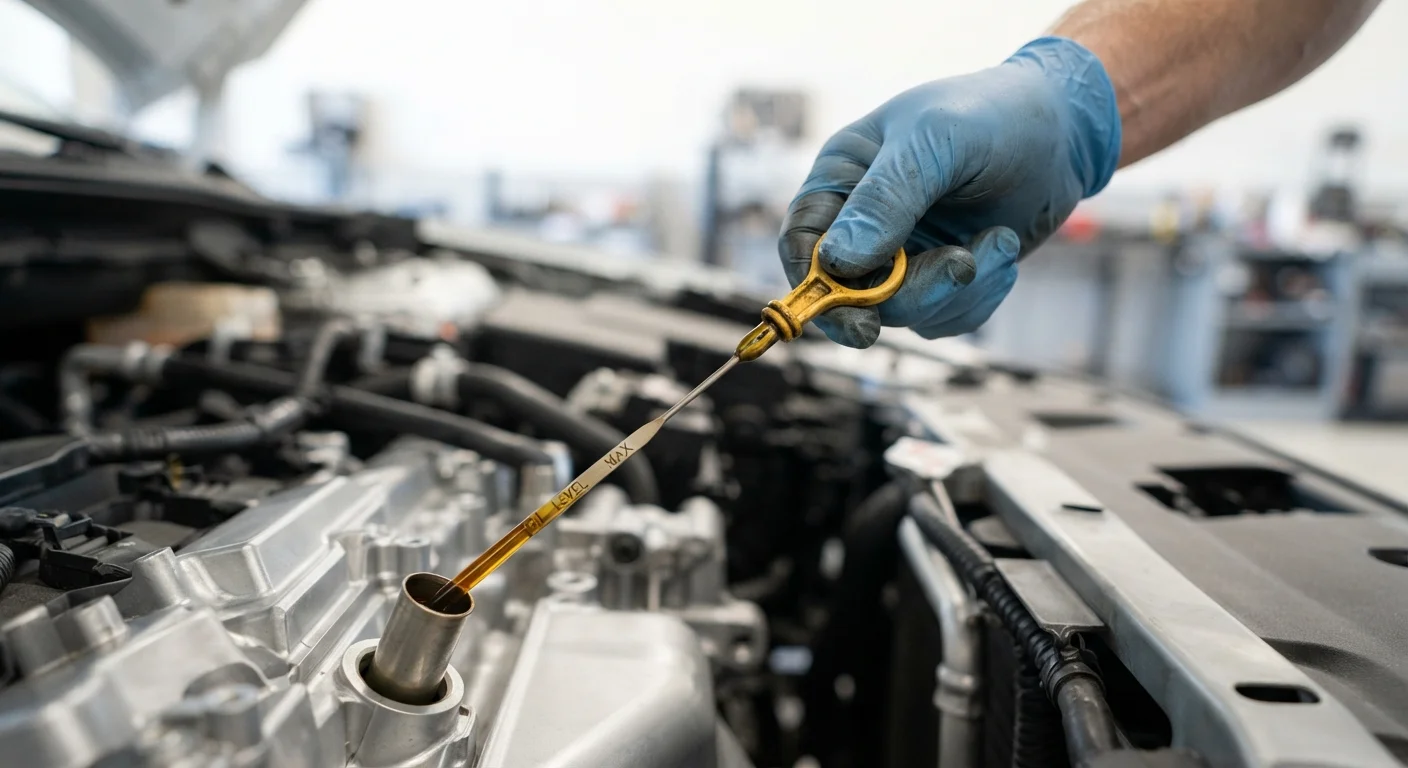
Oil darkens as it does its job of suspending combustion byproducts; color alone does not indicate that oil has failed.
Clean, amber-colored oil turns dark within a few hundred miles in a healthy engine because it is picking up fine carbon particles. That is normal function, not failure. What matters is whether the oil still lubricates effectively, which you cannot assess by color. A mechanic can check oil viscosity and contamination properly; color is not a reliable substitute.
Myth
Synthetic oil causes engine leaks in older vehicles.
Fact
Modern full-synthetic oil does not cause leaks; pre-existing seal wear may become more apparent after switching, but the oil itself does not damage seals.
This myth comes from early synthetic formulas that had different additive chemistry. Current synthetic oils are compatible with the seals and gaskets found in most passenger vehicles. If an older engine develops a leak shortly after switching, the seal was likely already worn. A qualified mechanic can inspect seal condition before you switch if the vehicle has high mileage and a history of minor leaks.
Myth
Once you switch to synthetic oil, you can never go back to conventional.
Fact
You can switch between conventional and synthetic oil, though doing so without good reason is generally not recommended.
Modern synthetic and conventional oils use compatible additive packages and base stocks. Mixing them or switching between them will not damage an engine. That said, if your engine was specified for synthetic, using conventional oil means shorter intervals and potentially less protection under high heat or load. The sensible approach is to use what the manual calls for and stay consistent.
Myth
The oil change reminder sticker from the shop is the authoritative guide.
Fact
Service shops often set reminder stickers at 3,000 miles regardless of the vehicle's actual specification.
Quick-lube shops apply stickers based on a conservative default, not your vehicle's engineering. The number on that sticker may be half of what your manual actually calls for. Use the sticker as a loose reminder that service is coming, but confirm the interval against your owner's manual or the vehicle's oil life monitor before scheduling service.
What severe driving actually means
Most owner's manuals list two maintenance schedules: normal and severe. Many drivers assume severe means highway driving or long road trips. The opposite is true. Short trips under five miles, frequent stop-and-go city traffic, towing, hauling heavy loads, dusty or unpaved roads, and extended idling all count as severe conditions. In those situations, oil breaks down faster because the engine rarely reaches full operating temperature long enough to burn off moisture and combustion byproducts.
If most of your driving is short neighborhood errands or daily urban commuting, the severe-duty interval in your manual applies to you, even if your car otherwise seems lightly used. That interval is typically 5,000 miles rather than 7,500 or 10,000, so check the manual rather than guessing.
For a broader picture of what your car needs on a regular basis, see the annual car ownership checklist for a year-round view of inspections and maintenance.
How to find the right interval for your vehicle
The owner's manual is the authoritative source. Manufacturers test their engines with specific oil grades and under controlled conditions; the interval printed in the manual reflects that testing. If the manual is missing, the manufacturer's website or a dealership service department can provide the specification.
Many vehicles built after roughly 2010 include an oil life monitoring system. These systems calculate remaining oil life using algorithms that track engine temperature, rpm, cold starts, and trip length. They are not simple mileage counters. When the system signals an oil change, that signal is more accurate than any fixed-mileage rule applied blindly. The one requirement: the system must be properly reset after each oil change, or the calculation becomes meaningless.
If you drive an older vehicle without a monitoring system, use the owner's manual interval as a starting point and adjust toward the severe-duty schedule if your driving fits those conditions.
This article is for general informational purposes only. Always consult your vehicle's owner's manual and a qualified mechanic for maintenance decisions specific to your car.