

Key Takeaways
Sinking fund
A sinking fund is money you set aside in small amounts over time to pay for a specific, predictable expense in the future. Instead of scrambling when a large bill arrives, you have already saved for it. Common uses include car repairs, holiday gifts, annual insurance premiums, and school supplies.
In personal finance, a sinking fund differs from an emergency fund: it targets a known, planned cost rather than an unexpected one. Each fund is typically kept separate, either as a dedicated savings account or a labeled budget category.
How a sinking fund works
The math is straightforward. You identify an expense you know is coming, estimate its total cost, and divide that amount by the number of months before you need the money. That result is your monthly contribution. When the bill arrives, the money is already there.
For example, if your family spends roughly $600 on holiday gifts each December, saving $50 a month from January through November means you arrive at the holidays with the full amount set aside. No credit card balance carries into the new year.
If you are new to budgeting in general, this plain-language starting point explains the core concepts before you layer in specific tools like sinking funds.
Name each fund something specific
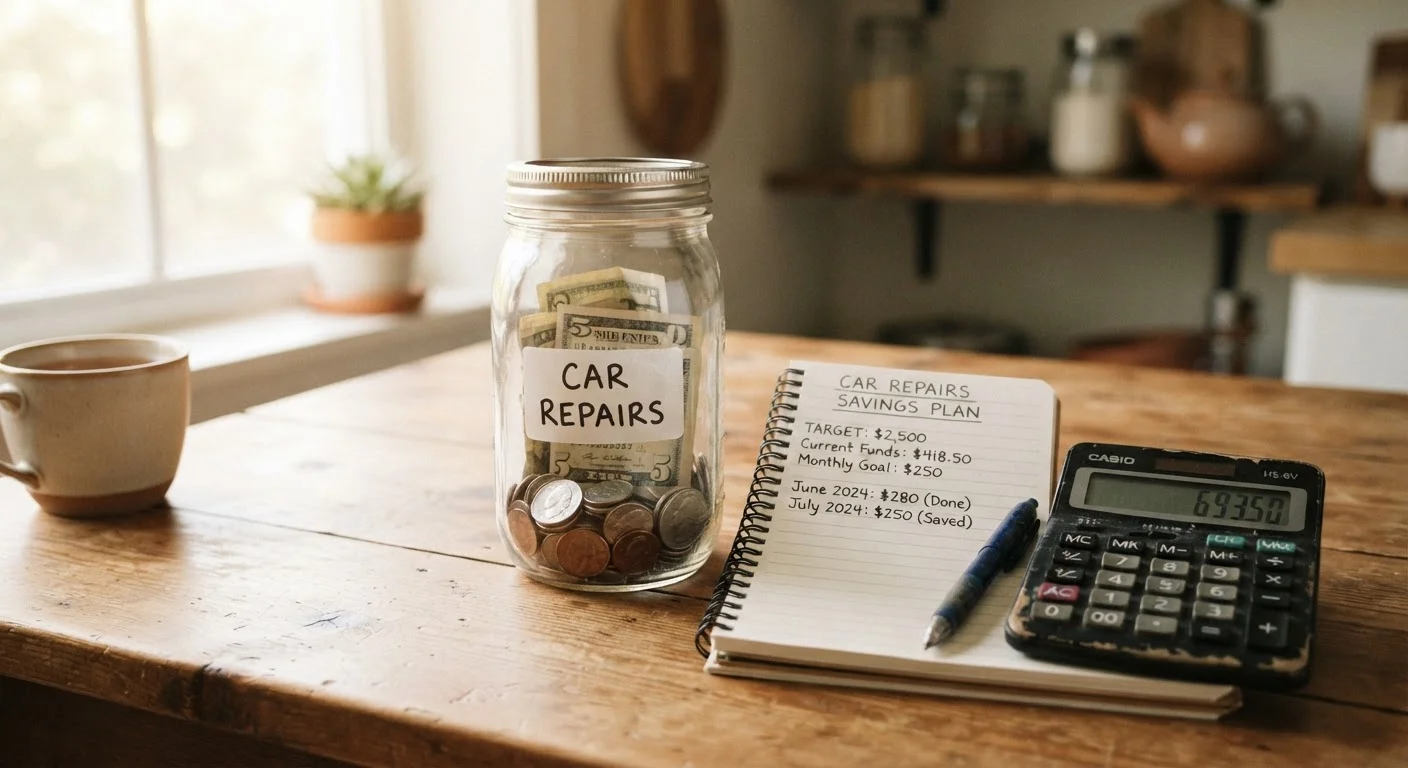
Calling a fund 'car repairs' or 'back-to-school' rather than 'savings' makes it easier to leave the money alone. Generic labels blur the purpose and increase the temptation to spend the balance on something unrelated. A clear name acts as a small accountability tool.
Sinking funds vs. emergency funds
People often confuse these two tools because both involve setting money aside. The difference is in what each covers.
An emergency fund holds money for events you cannot predict: a sudden job loss, an unexpected medical bill, a furnace that dies in January. A sinking fund holds money for costs you know will happen, even if the exact timing varies slightly. Your car will need new tires eventually. Your homeowner's insurance renews every year. Your child's school trip deposit is due in the spring.
Keeping them separate matters. If you pull holiday gift money from your emergency fund, you have weakened your safety net. If you let emergency savings double as a vacation fund, you may spend money you will urgently need later. For more on building that safety net alongside sinking funds, see building a family emergency fund on a tight budget.
Common categories families use
Sinking funds work for almost any predictable expense. The categories that come up most often for families include:
- Car maintenance and repairs
- Annual or semi-annual insurance premiums
- Holiday and birthday gifts
- Back-to-school shopping
- Medical and dental copays
- Home repairs and appliance replacement
- Vacations or family trips
- Extracurricular activity fees
These overlooked spending categories are worth reviewing before you set up your funds, because some costs families treat as surprises are actually predictable with a little planning.
$400
Unexpected expense many Americans cannot cover in cash
The Federal Reserve's Report on the Economic Well-Being of U.S. Households has consistently found that a substantial share of Americans would struggle to cover a $400 unexpected expense without borrowing.
$1,500+
Average annual car maintenance and repair cost per vehicle
AAA has reported that average vehicle ownership costs, including maintenance, tires, and repairs, run over $1,500 per year for many drivers, making it one of the most common budget surprises for families.
How to set one up
Start by listing two or three expenses that have caught your family off guard in the past year. For each one, estimate the annual total. Divide by 12 to get a monthly figure, or by 52 for a weekly figure if you are paid weekly.
Open a dedicated savings account for the funds, or use a budgeting system that lets you label categories separately. Many families use the envelope method or a digital equivalent. Zero-based budgeting and envelope budgeting are two systems that pair naturally with sinking funds, and comparing them can help you choose a structure that fits your household.
Automate the transfer if possible. Moving money on payday, before it mixes with spending money, removes the decision entirely. If your budget is tight, start with a smaller contribution and increase it when income allows. A partial fund is better than no fund.
A family budgets $1,200 for a summer road trip. They open a labeled savings account in January and transfer $150 a month for eight months.
A parent knows their child's travel sports league requires a $400 registration fee every March. Starting in October, they save $80 a month for five months.
A household sets aside $30 a month toward a car repair fund. After 18 months, the alternator fails and the repair costs $490.
Making it work on a tight budget
Families managing one income or a narrow margin sometimes assume sinking funds are only for households with extra money. They are not. The purpose of a sinking fund is to spread a large cost over many small payments, which is more manageable on a tight budget, not less.
If you can set aside $15 a month for car maintenance, that is $180 by the end of the year. It may not cover a major repair, but it reduces how much you need to borrow or charge. Single-earner households in particular benefit from this approach. Single-earner family budgeting strategies covers additional habits that help one paycheck go further.
This article is for general informational purposes only and does not constitute personalized financial advice. Consult a qualified financial professional for guidance specific to your situation.