

Key Takeaways
Paint sheen
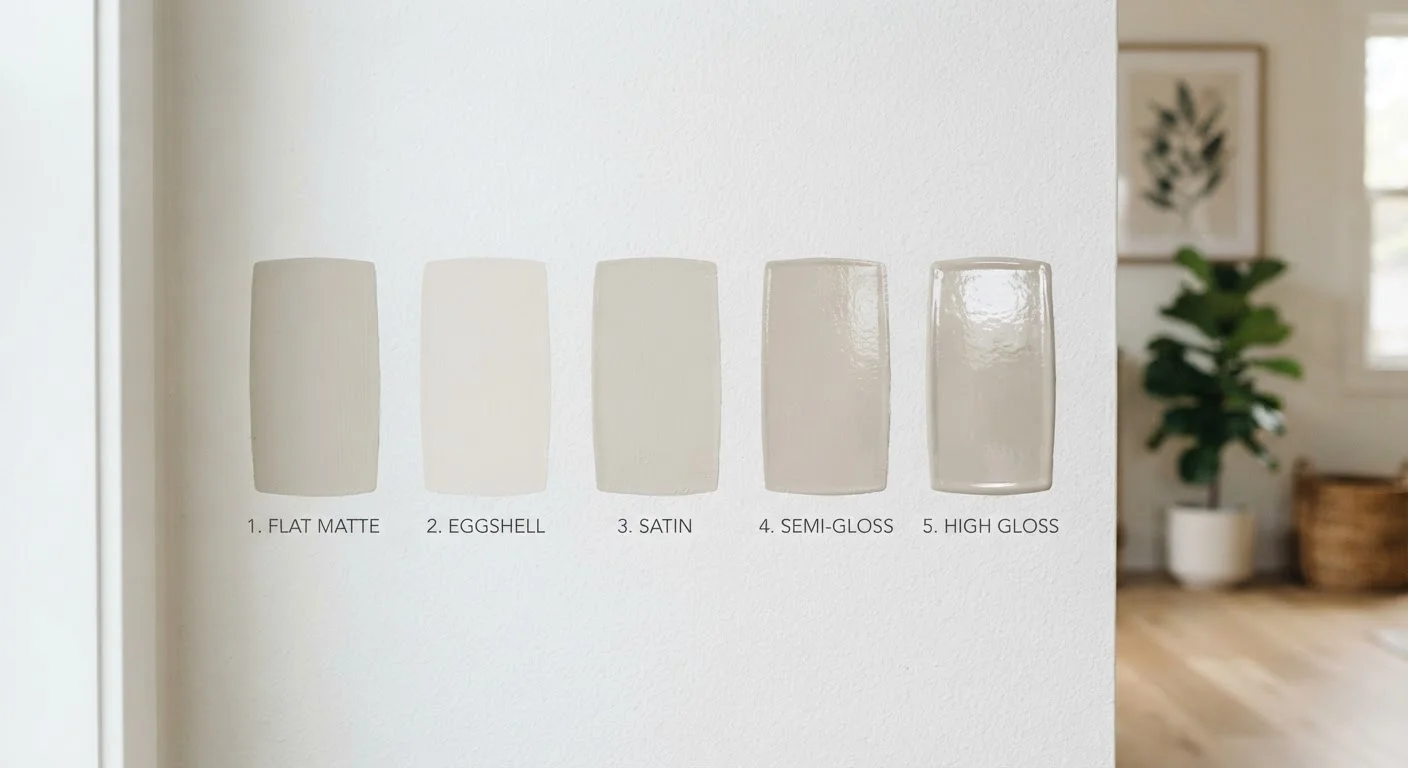
Paint sheen describes how much light a dried paint surface reflects. Manufacturers measure this with a gloss meter at specific angles, and the result determines how flat, silky, or shiny a finished wall looks. The sheen level also affects how durable and washable that surface will be.
Sheen is measured as gloss units (GU) at 60 degrees for most mid-range finishes and at 85 degrees for very flat paints. Higher GU values mean more light is reflected back.
Why sheen selection matters more than most people think
Most homeowners spend a lot of time picking a paint color and very little time thinking about sheen. That order of priority is backward. The wrong sheen in the wrong room creates real problems: walls that scuff after one season, finishes that turn yellow near the stove, or surfaces that make every old repair look worse than it did before painting.
Sheen also interacts with light. A glossier finish picks up natural and artificial light, which can change how a color looks throughout the day. A flat finish absorbs light, which can make a room feel warmer but also less crisp. Understanding these trade-offs before you open a can saves money and frustration.
Test your sheen before committing
Paint stores can mix sample sizes of almost any color and sheen. Before buying a full gallon, apply a sample patch to your actual wall and observe it in both daylight and artificial light. The sheen can look very different on a painted wall than it does on a store chip.
Flat and matte: where they belong
Flat and matte paints reflect very little light. They are excellent at hiding surface defects like small dings, uneven texture, or old patch repairs, because they scatter light rather than bouncing it back. That quality makes them a practical choice for older homes with walls that are less than perfect.
The trade-off is durability. Flat paint cannot handle repeated washing without showing wear or color loss. Scuffs, crayon marks, and fingerprints are difficult to remove without taking paint with them. For that reason, flat finishes work best in low-traffic areas: adult bedrooms, formal dining rooms, and ceilings. They are rarely a good fit for children's rooms, hallways, or any surface that gets touched often.
Eggshell and satin: the workhorses of interior painting
Eggshell sits just above flat on the sheen scale. It has a faint, soft glow, similar to the surface of an actual eggshell. That small amount of sheen adds enough durability to make the finish wipeable without looking shiny. Eggshell is widely used on living room and bedroom walls where families want something that holds up without drawing attention to the finish itself.
Satin is shinier than eggshell and noticeably more washable. It stands up to humidity and light scrubbing, which makes it a practical option for kitchens, bathrooms with lower moisture levels, kids' rooms, and high-traffic hallways. One thing to keep in mind: satin shows brush strokes and roller marks more readily than eggshell, so application technique matters more with this finish.
60%+
Interior wall paint sold in eggshell or satin finishes
Industry estimates from paint manufacturers suggest eggshell and satin together account for the majority of interior wall paint sold in the U.S., reflecting their broad suitability for most rooms.
85 degrees
Angle used to measure very flat paint sheen
Paint gloss is standardized by the American Society for Testing and Materials (ASTM), which specifies measuring angles based on the expected reflectivity range of the finish.
3 to 5 years
Typical repainting cycle for high-traffic interior walls
Home maintenance guidelines commonly suggest repainting heavily used interior surfaces every few years, with the actual interval depending on finish type and how much wear the surface receives.
Semi-gloss and gloss: durability with trade-offs
Semi-gloss reflects light clearly and resists moisture well. It is the standard finish for trim work, baseboards, window casings, and doors throughout most American homes. Many painters also use it on bathroom walls because the surface tolerates steam and frequent cleaning. Semi-gloss does show wall imperfections, so it benefits from careful surface preparation before painting.
High-gloss paint has the most reflective surface of any interior finish. It is the most durable and the most washable, which is why it appears on cabinet doors, furniture, and surfaces that take heavy daily use. The same reflectivity that makes it durable also amplifies any flaw in the underlying surface. Dents, seams, and uneven texture become much more visible under a gloss finish. If you plan to use high-gloss paint, thorough sanding and priming beforehand is not optional.
Sheen names vary by manufacturer
There is no single industry-wide standard for what labels like 'eggshell' or 'satin' mean. One manufacturer's satin may be glossier than another's semi-gloss. When comparing paints across brands, look at the gloss unit (GU) value on the technical data sheet rather than relying on the name alone.
A practical room-by-room reference
Matching sheen to room conditions is straightforward once you think about two factors: how much the surface will be touched and how much moisture it will see.
- Ceilings: flat or matte in nearly all cases.
- Adult bedrooms and formal rooms: flat or eggshell.
- Living rooms and family rooms: eggshell or satin, depending on how much foot traffic and activity the room handles.
- Children's bedrooms: satin, for easier cleaning.
- Hallways and staircases: satin or semi-gloss, because these surfaces are touched constantly.
- Kitchens: satin on walls, semi-gloss on trim and cabinets.
- Bathrooms: semi-gloss on walls and trim; high-gloss on cabinets if desired.
- Interior doors and trim throughout the house: semi-gloss is the most common choice.
These are starting points, not rules. A room with very smooth, freshly drywalled walls can handle a higher sheen than a room with textured or patched surfaces. Adjust based on what your walls actually look like.