

Key Takeaways
Summary
22 items · 30 to 60 minutes
Why the physical environment shapes learning
Children pay attention to their surroundings in ways adults often underestimate. A cluttered surface, a screen in the sightline, or poor lighting does not just cause mild annoyance: it measurably pulls attention away from a task. Environmental psychology research has shown that noise levels, light quality, and spatial organization each affect a child's ability to sustain focus and retrieve information.
That does not mean families need a dedicated home office or a major renovation. Many of the adjustments in this checklist cost nothing, and those that do require spending rarely exceed a few dollars. The goal is to audit what you already have, rearrange what you can, and add only what genuinely fills a gap.
If you are weighing how much structure to build into your child's day alongside this physical setup, the comparison of structured and child-led approaches is worth reading alongside this checklist. For children who need sensory or organizational accommodations, supporting a child with learning differences at home offers targeted adjustments that layer on top of this foundation.
Tools and supplies worth having on hand
Before working through the checklist, gather or take stock of the following. Most items are likely already in your home.
Desk or flat work surface
Provides a stable, dedicated area for writing, drawing, and reading tasks.
Adjustable chair or seat with foot support
Maintains correct posture during extended study sessions.
Desk lamp
Supplements overhead lighting to eliminate shadows on the work surface.
Supply container (repurposed tin, jar, or box)
Keeps pencils, erasers, and rulers in one spot so the child does not have to search mid-session.
Folders or a binder
Organizes loose papers by subject to prevent desk clutter.
Blank and lined paper stock
Ensures writing materials are always at hand without interrupting focus.
Floor cushion or soft seating
Creates a distinct reading spot separate from the writing desk.
Library card
Enables free rotation of books, reducing the need to purchase new titles.
The full setup checklist
Work through each group in order. Mark items as you go, and note anything that needs a follow-up purchase or decision.
Location and space
Lighting
Reducing distractions
Supplies and storage
Reading corner
Routine and habits
Watch out for perfection paralysis
Parents sometimes delay setting up a learning space because the room is not ideal or the budget is too tight for new furniture. An imperfect space used consistently will do far more for a child than a perfect one that is still being planned. Start with what you have today and adjust as needs become clearer.
Avoid over-decorating the study area
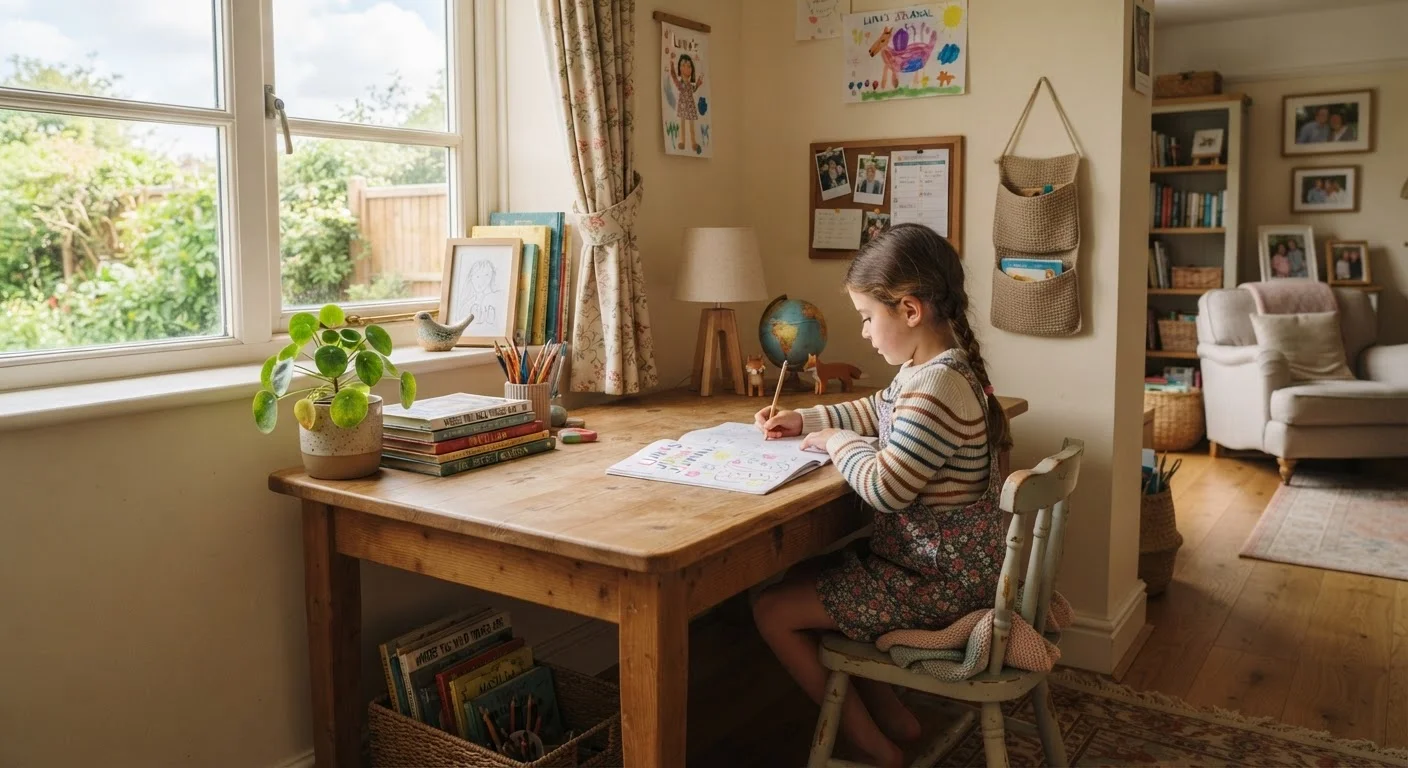
Motivational posters, colorful bulletin boards, and multiple displayed items can compete for a child's attention during focused work. Research on classroom design suggests that highly decorated walls can distract younger children. Keep the immediate study area visually calm and reserve decorative elements for adjacent walls or the reading corner.
Keeping the space working over time
A learning space drifts back toward clutter if there is no routine attached to it. A two-minute tidy at the end of each study session, where the child returns supplies and stacks any loose papers, is more effective than a weekend reset. Involve children in that habit from the start so the space feels like theirs to maintain.
Rotate supplies and materials every few months. A fresh set of drawing papers, a library book swap, or simply rearranging the shelf can reset a child's curiosity without spending anything. Building a reading habit in kids who resist books has low-cost ideas for keeping a book corner appealing when novelty fades.
When you do need to buy something, plan it the same way you would any household purchase. A structured shopping list approach helps you arrive at the store with a clear purpose and leave without unplanned additions. For broader ideas on managing family costs while investing in children's education, the family budgeting hub is a useful starting point.