

Key Takeaways
Unit price
A unit price is the cost of a product broken down to a standard measure, such as per ounce, per pound, per sheet, or per count. Stores are required to display it on shelf tags in most U.S. states. It lets you compare two packages of different sizes on equal terms, regardless of what the front of either box says.
Unit price calculations divide the total shelf price by the net weight or count declared on the package. Where a store uses weight-based unit pricing, the net weight on the label (not gross weight) is the denominator.
What the shelf tag is actually showing you
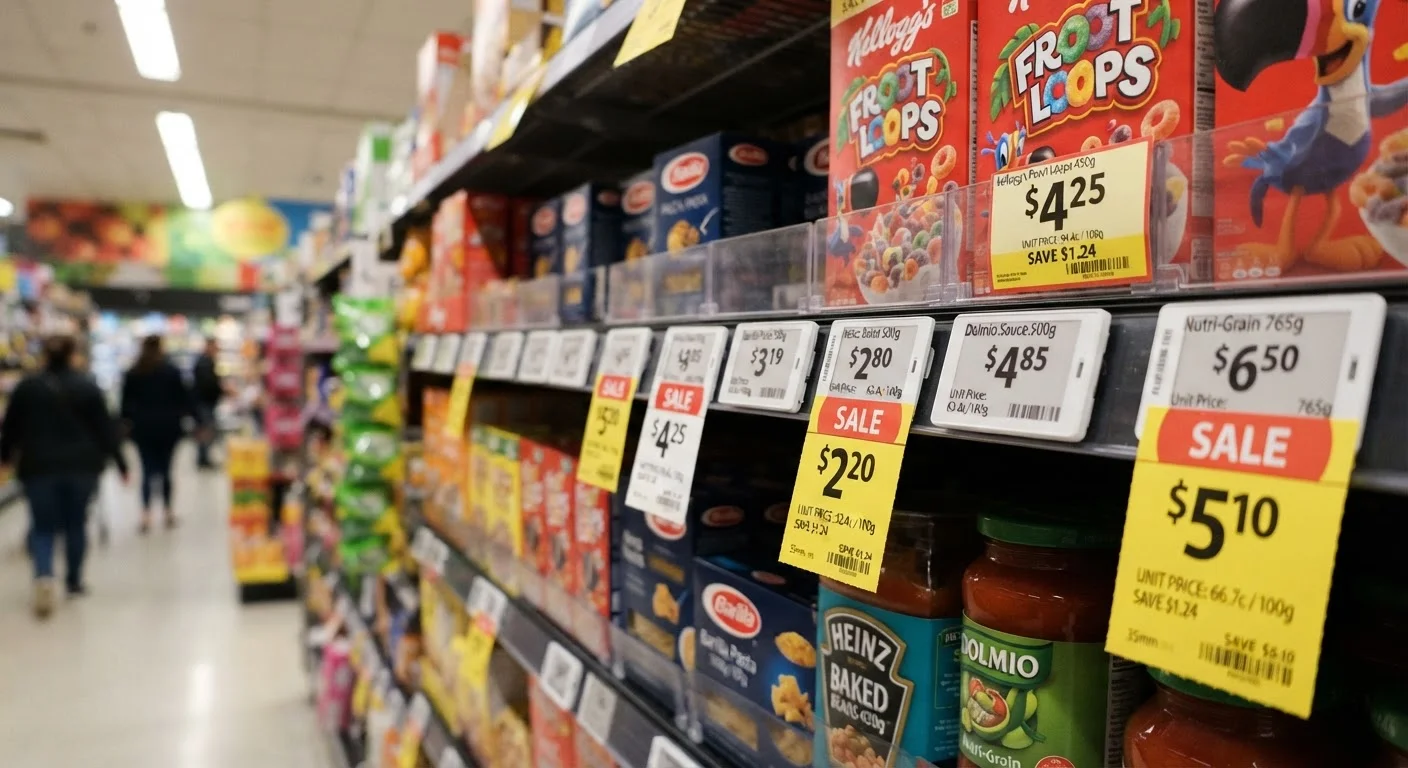
Every grocery shelf tag has two numbers, and most shoppers only read one of them. The large number is the shelf price: what you pay at checkout for that specific package. The smaller number, often tucked into a corner, is the unit price: what you pay per ounce, per pound, per count, or per some other standard measure.
Those two numbers can tell completely different stories. A 32-ounce bottle of dish soap priced at $4.79 and a 20-ounce bottle priced at $3.29 look close in shelf price. But the unit prices are $0.15 per ounce versus $0.16 per ounce. In this case the larger bottle wins narrowly. Flip the scenario with a different product and the smaller size can win. The shelf price alone will not tell you which way it goes.
Stores in most U.S. states are required to display unit prices, but the rules on which unit to use are not standardized. Paper towels might show price per sheet in one store and price per roll in another. Juice might list price per fluid ounce on one brand and price per serving on a competing brand. When units differ, the tags are not directly comparable without a conversion.
How sale prices interact with unit prices
A sale sticker changes the shelf price. It does not automatically change where a product stands relative to everything else on the shelf. This distinction matters more than most shoppers realize.
Consider a scenario: a 15-ounce jar of pasta sauce normally priced at $2.89 goes on sale for $2.49. Its unit price drops from about $0.19 to $0.17 per ounce. Meanwhile, a store-brand 24-ounce jar sitting next to it carries a steady $2.99 price, putting its unit price at $0.12 per ounce. The sale item is cheaper than it was, but it is not cheaper than its neighbor.
Sales are designed to move specific products. That is a business decision, not necessarily a value signal. Checking the unit price of the sale item against nearby options takes about ten seconds and answers the question the sign cannot.
Read unit prices before shelf prices
Train yourself to find the unit price first on every tag. Once that number is in your head, the shelf price becomes secondary. This single habit change removes most of the guesswork from aisle-by-aisle comparisons.
For a broader look at how promotions and packaging can mislead even careful shoppers, see grocery budgeting myths examined against the facts.
When the math gets complicated
Unit pricing is straightforward when the store uses one consistent measure across a category. It gets harder in three common situations.
Different units on competing products. If one brand lists price per ounce and another lists price per liter, you need to convert. One fluid ounce is approximately 29.6 milliliters. A phone calculator handles this in seconds.
Multi-pack deals. A "buy two for $5" tag often does not update the unit price to reflect the deal price. The displayed unit price may still reflect the single-item price. Calculate the actual unit price based on the deal price you will pay.
Weight versus count products. For products sold by count (napkins, tea bags, diapers), price per count is usually the right comparison unit. For products sold by weight, price per ounce or pound is more accurate. Mixing the two across a comparison gives you a meaningless number.
Larger packages are not always the better deal once storage limits, expiration dates, and your household's actual consumption rate enter the calculation.
A practical habit at the shelf
You do not need a system. You need one consistent check: look at the unit price before the shelf price, not after. When the unit price is the first number you see, the shelf price becomes context rather than the decision.
If a tag is missing or illegible, the math is simple: shelf price divided by net weight or count. That number on your phone screen is all you need to compare anything in the aisle on equal terms.
A quick cart audit before checkout can catch cases where you picked up a higher-unit-price item without realizing it, especially on a busy shopping trip where you moved fast through multiple aisles.
For categories where quality differences are real (cooking oils, for example), unit price is one input, not the only one. But for commodity products where brands perform similarly, it is the most reliable number on the shelf.