

| Color code: red | Stop or act immediately |
| Color code: amber | Schedule repair within days |
| Color code: green or blue | System active, not a fault |
| Check engine code reading | Often free at auto parts retailers |
| Tire pressure reference | Driver's door jamb sticker, not the tire sidewall |
| Owner's manual format | Most automakers post free digital copies on their websites |
Why warning lights exist and how to read them
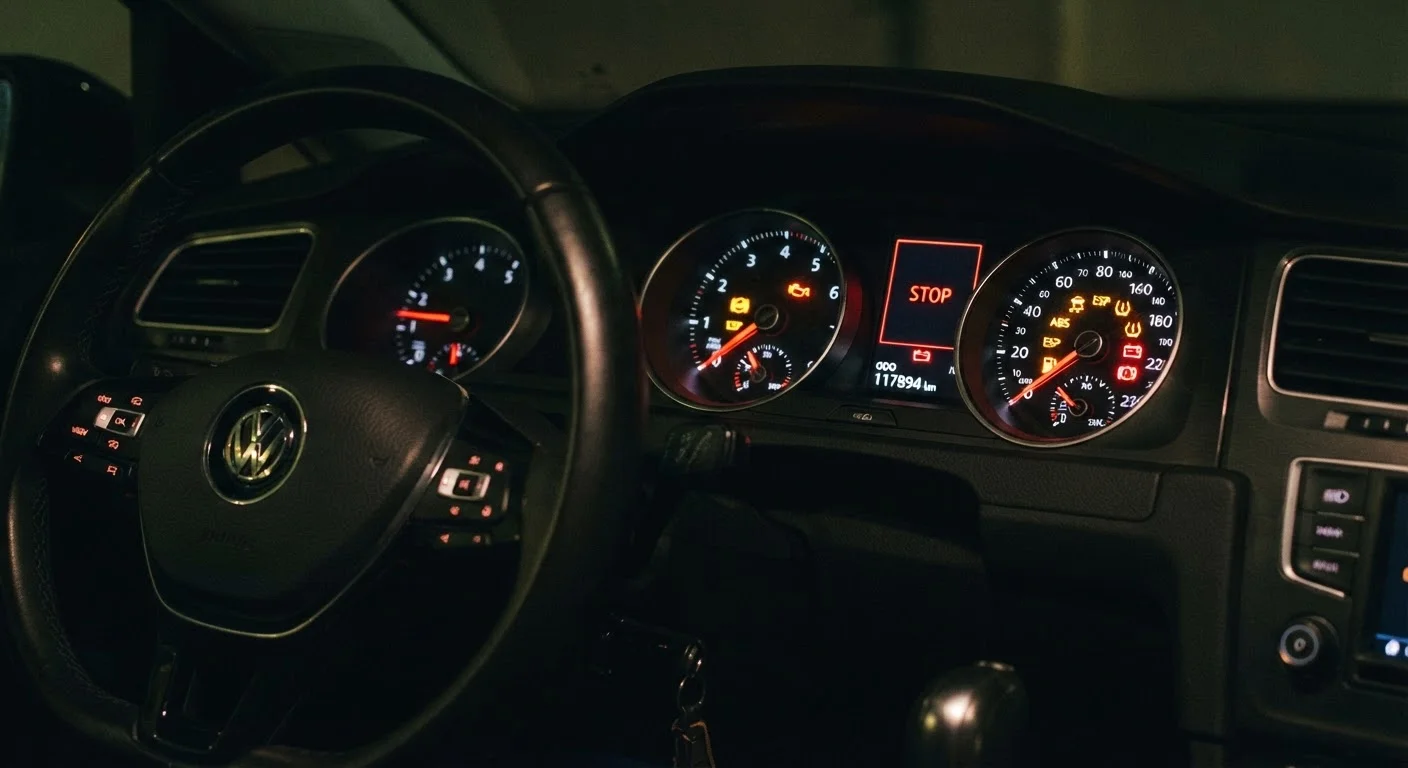
Your car's onboard diagnostic system monitors dozens of sensors continuously. When something falls outside its acceptable range, it triggers a warning light on your instrument cluster. The color gives you a quick read on urgency: red means stop or act immediately, amber (orange-yellow) means investigate soon, green or blue means a system is active and working normally.
The shape of the icon is standardized across most modern vehicles sold in the United States, so the same symbol generally means the same thing regardless of make or model. However, your owner's manual is the definitive reference for your specific vehicle. If you do not have a paper copy, most automakers post digital versions on their websites at no cost.
OBD-II code
A standardized diagnostic trouble code stored by your car's onboard computer when a sensor reading falls outside normal parameters. A code reader or scan tool retrieves these codes to help identify which system triggered a warning light.
TPMS
Tire Pressure Monitoring System. A federal mandate on vehicles sold in the U.S. since 2008 that warns drivers when one or more tires drops significantly below the recommended inflation pressure.
Alternator
A generator driven by the engine that keeps the battery charged and powers electrical systems while the car runs. A failing alternator can cause the battery warning light to illuminate.
Catalytic converter
An emissions control device in the exhaust system that converts harmful combustion byproducts into less harmful gases. A failing converter often triggers a check engine light and typically requires professional replacement.
Red lights: stop driving or act right away
A red warning light is the system telling you that continuing to drive risks engine damage, brake failure, or personal safety. The most common ones families encounter are listed below.
- Oil pressure warning: Shaped like an old-style oil can. If this appears while driving, pull over safely and shut the engine off. Running an engine with low or no oil pressure can destroy it within minutes. Check the oil level with the dipstick once the engine is cool. If the level is fine and the light stays on after a restart, call a mechanic before driving further.
- Engine temperature warning: Looks like a thermometer in liquid. Pull over, turn off the engine, and let it cool for at least 30 minutes before opening the hood. Never open a hot radiator cap. A persistently overheating engine can warp cylinder heads, a repair that typically costs more than a thousand dollars.
- Battery/charging warning: A rectangle with a plus and minus sign. This can mean the alternator is not charging the battery. You may have limited driving time before the car loses power entirely. Avoid using accessories and drive directly to a shop.
- Brake warning: An exclamation point inside a circle with parentheses. First check that the parking brake is fully released. If it is and the light remains on, brake fluid may be low or there could be a hydraulic failure. Do not drive until a mechanic inspects the system.
Amber lights: schedule a repair, but you can usually finish your trip
Amber lights indicate a problem that needs attention within days, not immediately during that drive. Ignoring them long-term typically turns a modest repair into an expensive one.
| Color code: red | Stop or act immediately |
| Color code: amber | Schedule repair within days |
| Color code: green or blue | System active, not a fault |
| Check engine code reading | Often free at auto parts retailers |
| Tire pressure reference | Driver's door jamb sticker, not the tire sidewall |
| Owner's manual format | Most automakers post free digital copies on their websites |
- Check engine light: A small engine outline. This light covers a wide range of issues, from a loose gas cap to a failing catalytic converter. Tighten the gas cap first. If the light does not go out after a day or two of driving, have the trouble code read. Many auto parts retailers do this at no charge. The code narrows down the cause before you pay a diagnostic fee at a shop.
- Tire pressure (TPMS): A cross-section of a tire with an exclamation point. One or more tires is below the recommended inflation level. Check all four tires and the spare with a gauge and inflate to the pressure listed on the sticker inside your driver's door jamb, not the number molded into the tire sidewall. The light may not reset instantly; drive a few miles and it should clear.
- Traction control/stability control warning: A car with wavy lines beneath it. If it flashes briefly during acceleration on a slippery surface, the system is working as intended. If it stays on solid, the system may be disabled or there is a sensor fault worth diagnosing.
- Transmission temperature warning: A gear inside a thermometer. The transmission fluid may be overheating. Reduce speed, avoid towing if loaded, and have the fluid level and condition checked promptly.
Just as you would pay attention to warning signs in your home's systems, such as a tripping circuit breaker or a sputtering furnace, dashboard lights reward early attention. The guide to understanding your home's core systems walks through a similar approach for plumbing, electrical, and HVAC.
Green and blue lights: information, not warnings
These are status indicators. High beams on, turn signal active, cruise control engaged, and four-wheel drive mode selected all appear in green or blue. They are telling you something is active, not that something is wrong. If a green or blue light appears unexpectedly and you did not activate that feature, consult your owner's manual to confirm whether a system switched on automatically.
One exception worth noting: some vehicles use a blue coolant temperature indicator to show the engine is still cold. It typically disappears within a few minutes of driving and is not a fault signal.
This article provides general information about vehicle warning lights for educational purposes only. It is not a substitute for diagnosis by a qualified mechanic. Always consult a licensed automotive professional before making repair decisions based on warning light behavior.