

Key Takeaways
Start here
How your plumbing system works
Next
How your electrical system works
Then
How your HVAC system works
Apply it
Warning signs you should not ignore
When you need help
When to call a licensed professional
How your plumbing system works
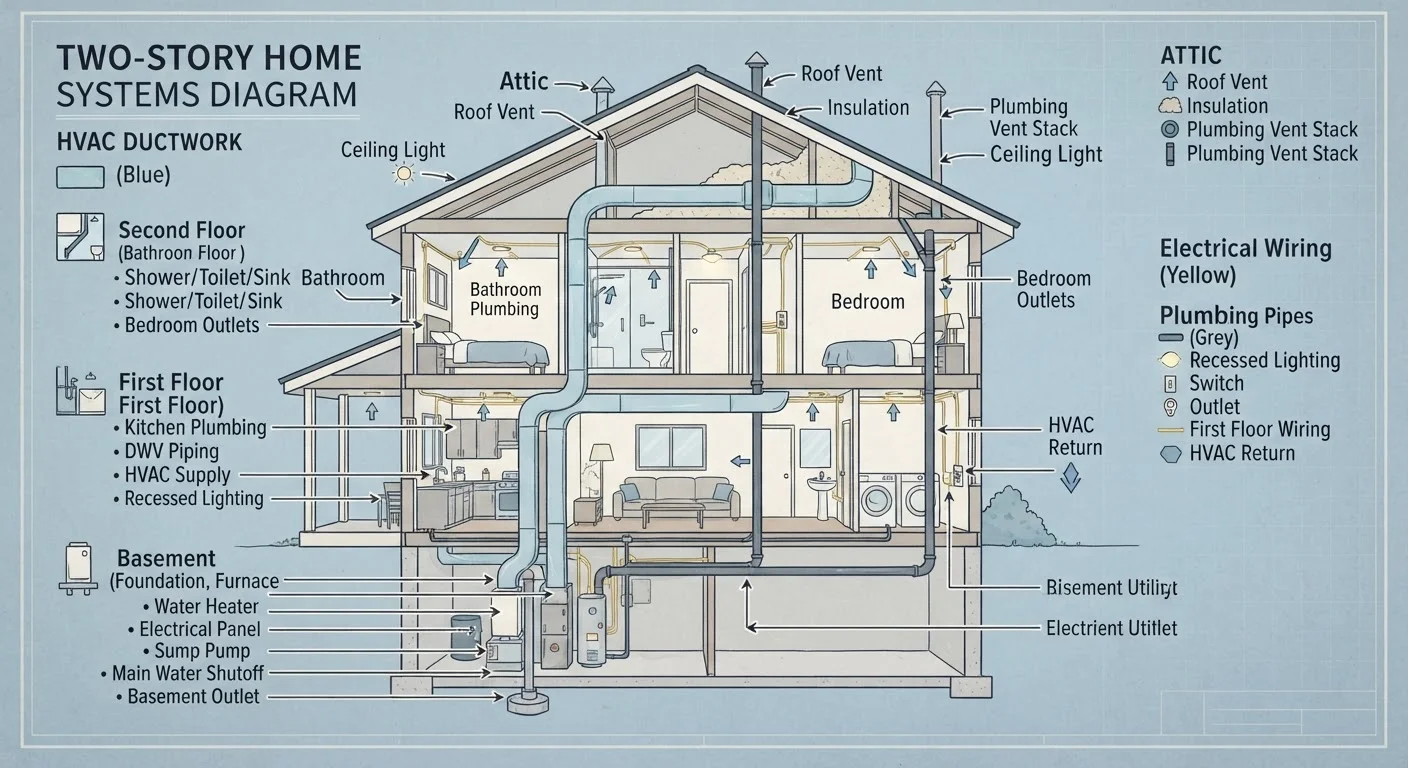
Your plumbing system has two sides that never mix. The supply side brings pressurized fresh water in from the municipal main or a private well. The drain-waste-vent (DWV) side carries used water and waste out to a sewer or septic tank, using gravity rather than pressure.
Cold water travels directly from the supply to fixtures. Hot water takes a detour through the water heater first. The vent pipes that poke through your roof are not a quirk: they allow sewer gases to escape safely and keep drains flowing smoothly by letting air in behind the water.
The single most useful thing you can do right now is locate your main water shutoff valve. When a pipe bursts or a supply line cracks, turning off that valve immediately limits how much damage water causes. Write its location down and make sure every adult in your household knows where it is.
Supply line
A pipe or flexible hose that carries pressurized fresh water to a fixture such as a toilet, faucet, or washing machine.
DWV system
Drain-waste-vent: the network of pipes that carries used water and waste out of the home and vents sewer gases safely through the roof.
Circuit breaker
A resettable safety switch in the electrical panel that automatically cuts power to a circuit when it detects too much current.
GFCI outlet
Ground fault circuit interrupter: an outlet with a built-in sensor that cuts power almost instantly if it detects current traveling an unintended path, required near water sources.
Heat pump
A device that moves heat between the indoors and outdoors using refrigerant, able to both heat and cool a home depending on the season.
Return-air grille
The vent cover that pulls room air back into the HVAC system to be filtered, heated, or cooled before being circulated again.
How your electrical system works
Power enters your home through the utility company's service drop, passes through the electric meter, and arrives at the main electrical panel, sometimes called the breaker box or load center. From there, individual circuits fan out through the house, each protected by its own circuit breaker.
Each circuit is sized for a specific load. Kitchen circuits carry more amperage than bedroom circuits because appliances draw more power. Ground fault circuit interrupter (GFCI) outlets, required near water sources like sinks and bathrooms, add a second layer of protection by cutting power the instant they detect current leaking to ground.
A tripped breaker is designed to tell you something: the circuit had too much load, or there is a fault somewhere. Resetting it once is reasonable. If it trips again, stop using that circuit and have an electrician look at it. For anything beyond replacing an outlet or a light switch, consult when permits are required before starting work.
How your HVAC system works
HVAC equipment moves heat rather than creates it from nothing. A furnace burns fuel or uses electric resistance to warm air. A central air conditioner or heat pump moves heat between the refrigerant loop and outdoor air. The blower fan then pushes conditioned air through sheet metal or flexible ducts to each room, and return-air grilles pull stale air back to be filtered and reconditioned.
The air filter sits between the return-air side and the blower. A clogged filter forces the blower to work harder, raises energy costs, and can cause the system to overheat or freeze up. Changing the filter on schedule is the simplest thing you can do to extend equipment life. For draft-proofing around the spaces your HVAC has to work hardest to condition, see how caulking and weatherstripping work.
Set a filter change reminder now
Write the date on the edge of a new filter with a marker each time you install it. Set a phone reminder for 30, 60, or 90 days out depending on your filter type. Consistent filter changes are the lowest-cost maintenance habit for any HVAC system.
Warning signs you should not ignore
Each system has its own pattern of early warnings.
Plumbing: Slow drains across multiple fixtures at once point to a main line problem, not just a clogged sink. Water stains on ceilings or walls, a sudden drop in water pressure, or a water bill that jumps without explanation all deserve prompt attention.
Electrical: Flickering lights, outlets that feel warm to the touch, a burning smell near the panel, or breakers that trip repeatedly are not nuisances to reset and forget. These can indicate wiring problems that carry real fire risk.
HVAC: Unusual noises (banging, squealing, or grinding), uneven temperatures between rooms, a system that runs constantly without reaching the set temperature, or a sudden spike in your utility bill can all signal a mechanical issue worth investigating.
Catching these patterns early almost always costs less than waiting. The weekend maintenance tasks guide covers a practical checklist for staying ahead of problems.
When to call a licensed professional
A clear rule applies across all three systems: if the work involves your home's gas lines, the main electrical panel, structural elements, or anything that requires opening walls to access drain lines, hire a licensed contractor. These are not areas where a mistake is easily undone, and most US jurisdictions require permits and inspections for this work anyway.
For a broader view of which projects tend to require permits in the US, see the permits overview. And before starting any repair project, it helps to understand the planning pitfalls: why DIY repairs go wrong before a tool is picked up covers what to think through first.
Tasks you can reasonably handle yourself include replacing a showerhead, swapping an outlet cover, changing HVAC filters, and cleaning sink traps. Anything beyond those straightforward jobs benefits from a professional's assessment, even if the repair itself turns out to be simple.
This article is for general informational purposes only and does not constitute professional electrical, plumbing, or HVAC advice. Always verify local code requirements with your local building department and consult a licensed professional for any work that may affect your home's safety or require a permit.