

| Caulk type | Silicone, latex/acrylic, or specialty (kitchen, bath) |
| Weatherstripping types | Foam tape, V-strip (tension seal), door sweep, neoprene, EPDM |
| Typical caulk lifespan | 5 to 10 years (exterior), longer indoors |
| Foam weatherstripping lifespan | 1 to 3 years before compression loss |
| Permit usually required | No, for caulking and weatherstripping |
| Professional recommended | For gas lines, recessed-light sealing, and whole-house air sealing near combustion appliances |
The difference between these three methods
Caulking, weatherstripping, and draft-proofing often get lumped together, but each one addresses a different problem in a different location. Using the wrong method wastes time and money, and the gap you were trying to close stays open.
| Caulk type | Silicone, latex/acrylic, or specialty (kitchen, bath) |
| Weatherstripping types | Foam tape, V-strip (tension seal), door sweep, neoprene, EPDM |
| Typical caulk lifespan | 5 to 10 years (exterior), longer indoors |
| Foam weatherstripping lifespan | 1 to 3 years before compression loss |
| Permit usually required | No, for caulking and weatherstripping |
| Professional recommended | For gas lines, recessed-light sealing, and whole-house air sealing near combustion appliances |
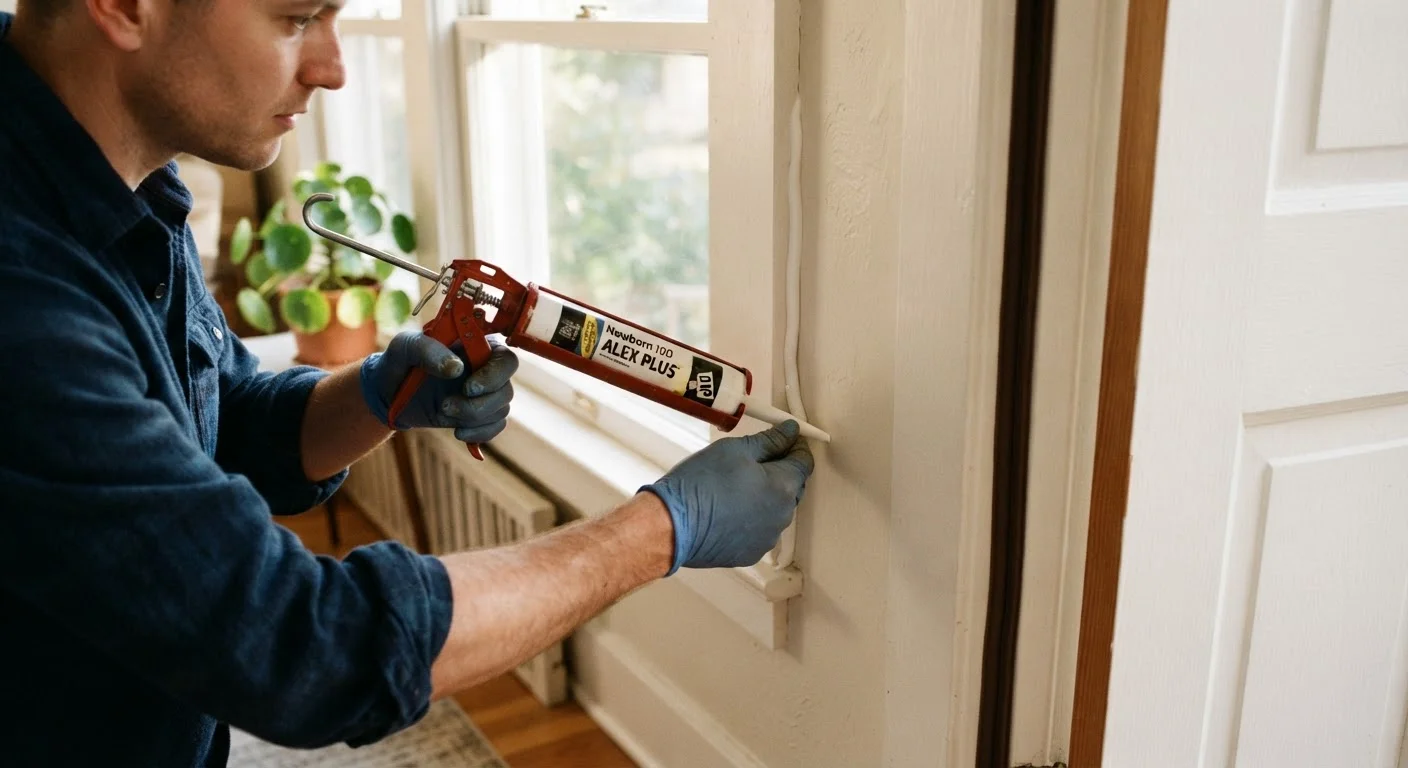
Caulk is a flexible sealant applied as a paste that hardens in place. It fills stationary gaps, meaning gaps that do not move when a door or window opens. A crack where a window frame meets the wall, or where a pipe enters the house, is a job for caulk. The material bonds to both surfaces and flexes slightly as the house expands and contracts with temperature changes.
Weatherstripping is a compressible material, often foam, rubber, felt, or metal, attached along the edges of movable parts: doors and operable windows. When the door closes, the weatherstripping compresses to fill the gap. When the door opens, it springs back. Because it has to survive thousands of open-and-close cycles, durability matters as much as fit.
Draft-proofing is the broader goal. It covers everything you do to stop uncontrolled air movement through the building envelope, the shell of walls, floors, ceiling, windows, and doors that separates inside from outside. Caulking and weatherstripping are both draft-proofing methods. So are door sweeps, foam gaskets behind outlet covers, and spray foam insulation used to fill large irregular gaps around pipes or framing.
Where caulk belongs and where it does not
Caulk works on stationary joints. Common places include: around window and door frames on the exterior, along baseboards where they meet the floor, where walls meet ceilings in drafty rooms, around any penetration through an exterior wall (pipes, cables, vents), and at the sill plate where the house framing sits on the foundation.
Silicone caulk handles exterior and wet areas well because it resists moisture and UV exposure. Latex or acrylic caulk is easier to paint over and cleans up with water, making it a common choice for interior trim work. Kitchen and bath formulas add mildewcide to resist mold.
Do not apply caulk to moving joints. If you caulk the edge of a door or a window sash that slides or swings, the caulk will tear away within weeks. That joint needs weatherstripping instead. For tile work, the rule for choosing between caulk and grout is its own topic: see tile grout vs. caulk for a clear explanation.
Before applying new caulk, remove old caulk fully. Applying over cracked or peeling caulk produces a weak bond and the gap will reopen.
How to choose and apply weatherstripping
The right type of weatherstripping depends on the gap size and how much friction it will experience. Foam tape is easy to install and inexpensive, but it compresses permanently over time and typically lasts one to three years. V-strip (tension seal) is a folded plastic or metal strip that fits into the channel on the side of a door or window and holds its shape much longer. Door sweeps attach to the bottom edge of a door to seal the gap against the threshold.
To check whether you need weatherstripping, hold a piece of paper in the closed door or window frame. If you can pull it out without tearing, air is moving through that gap too. You can also hold a candle or incense stick near the edge on a windy day: visible smoke drift means air is getting in.
Installation is usually straightforward, but measure first. Cut weatherstripping slightly longer than the gap, then trim to fit. Press adhesive-backed types firmly for at least 30 seconds. For exterior doors in climates with large temperature swings, neoprene or EPDM (a synthetic rubber) holds up better than foam.
Routine maintenance is worth doing. A quick seasonal check of weatherstripping and caulk takes less than an hour and can catch gaps before they grow.
Draft-proofing spots most homeowners miss
Windows and doors get most of the attention, but significant air leakage often comes from less obvious spots. Electrical outlets and switch plates on exterior walls can let in cold air if there is no foam gasket behind the cover plate. Attic hatches are a common source of heat loss if they have no weatherstripping around the frame. Fireplace dampers, when left open, act like an open window.
Recessed lights in ceilings below unconditioned attic space can leak air directly into the attic cavity. Sealing these requires fire-rated materials; this is a job where consulting a licensed contractor makes sense, especially if the fixtures are older and their rating is unknown.
Large gaps around pipes and ducts where they pass through floors or walls can be filled with caulk for small gaps or backer rod plus caulk for wider ones. Very large irregular gaps may call for spray foam. Any work involving gas lines should be left to a licensed professional.
Draft-proofing does not require a permit in most jurisdictions, but if your home has combustion appliances (gas furnace, water heater, wood stove), sealing the building envelope too tightly without proper ventilation can affect combustion air supply. Check with a licensed HVAC professional before doing extensive air sealing in a tightly enclosed mechanical room. See home systems basics for context on how your heating system interacts with the rest of your house.
Putting it all together
The short version: caulk fills stationary cracks and gaps, weatherstripping seals movable edges, and draft-proofing is the overall goal both serve. Most families can handle caulk and weatherstripping themselves on a weekend afternoon. The areas that involve electrical, gas, or structural work call for a licensed professional.
For anything more involved, such as whole-house air sealing before an insulation upgrade, a certified home energy auditor can identify exactly where your home is losing air. Some state and utility programs offer subsidized audits or rebates for air-sealing work. Contact your utility provider or your state energy office to ask what programs are available in your area.