

Key Takeaways
Our Verdict
Tent camping suits families with older kids who already own gear and want the lowest possible nightly cost. Glamping works when the family wants an outdoor feel without the setup burden, provided the budget allows for higher nightly rates. Cabin rentals are the most reliable option for families with young children or mixed-age groups where a working kitchen, indoor plumbing, and weather protection matter more than novelty.
| Best for | Recommended |
|---|---|
| Families with school-age kids and existing gear | Tent camping |
| Families wanting outdoor experience without setup work | Glamping |
| Families with toddlers or mixed ages needing reliable comfort | Cabin rental |
| Families prioritizing flexibility and predictable costs | Cabin rental |
What each option actually involves
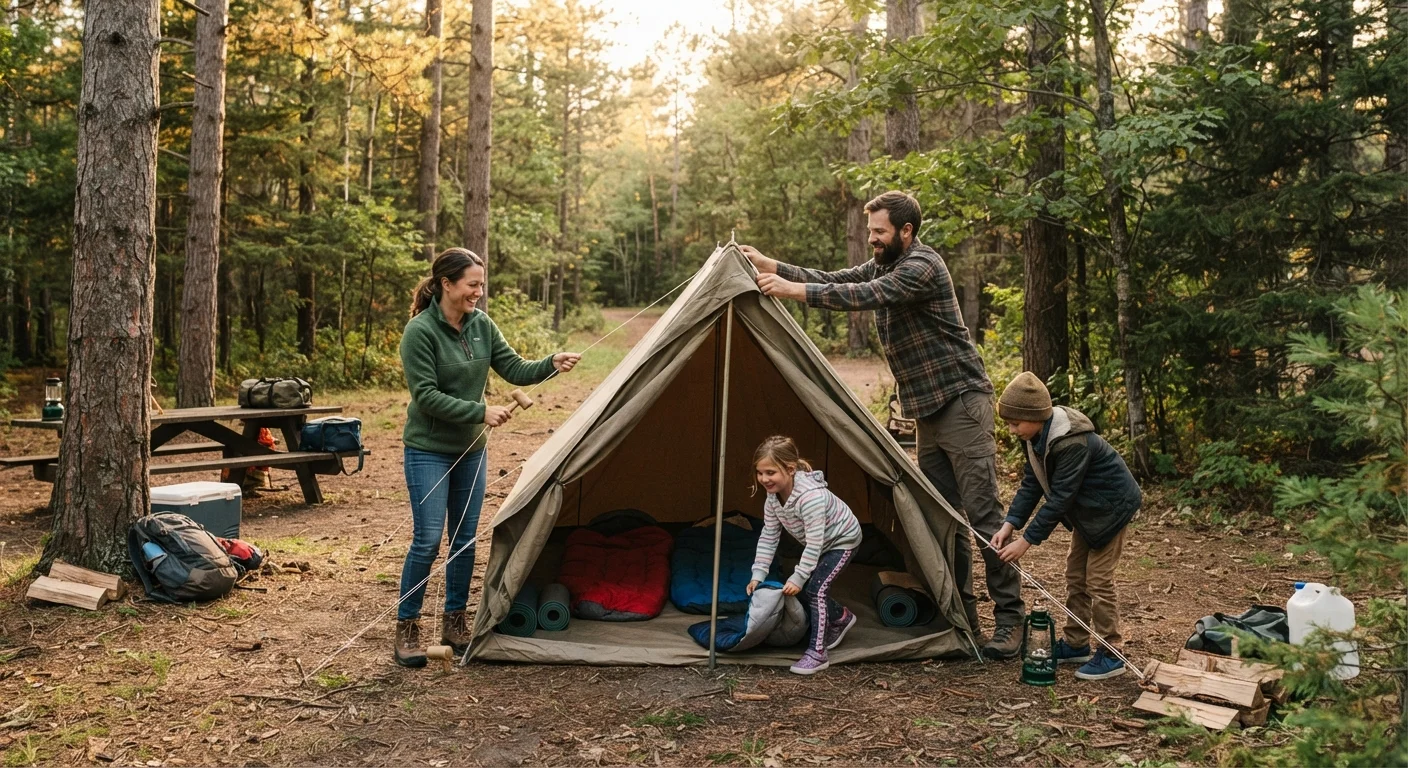
Tent camping means carrying or transporting your own shelter, sleeping systems, cooking setup, and light sources. State and national park campgrounds typically charge $20 to $35 per night for a standard site, which sounds low until you price out a four-person tent, sleeping bags rated for the season, a camp stove, and a cooler. For families who already own the gear, the per-trip cost is genuinely low. For families buying it all at once, the startup expense can exceed several cabin weekends.
Glamping occupies the middle ground. A pre-pitched bell tent, safari tent, or yurt usually comes with real beds, electricity, and sometimes a private bathroom. Nightly rates vary widely, but $150 to $300 per night is common at established glamping properties. That range overlaps directly with modest cabin rentals, which changes the value equation considerably.
Cabin rentals through vacation rental platforms or state park systems give families a lockable structure with a kitchen, beds, and indoor plumbing. Costs range from under $100 per night at rustic state park cabins to several hundred at privately listed properties. The kitchen alone can cut food costs substantially compared to eating out, a point worth remembering when budgeting. For more on where family travel spending tends to surprise people, see where family vacation costs hide.
Comparing comfort, cost, and effort
| Tent camping | Glamping | Cabin rental | |
|---|---|---|---|
| Typical nightly cost | $20-$35 (site only) | $150-$300 | $80-$250 |
| Gear required | Extensive | None | Minimal |
| Setup effort | High | Low to none | None |
| Weather protection | Low | Moderate | High |
| Indoor plumbing | Shared or none | Varies | Usually yes |
| Cooking setup | Camp stove or fire | Varies | Full kitchen typical |
| Suitable for toddlers | Challenging | Sometimes | Generally yes |
| Booking lead time needed | Moderate | High | Moderate to high |
The table above captures the broad differences, but a few details deserve more attention. Weather is the biggest wildcard in camping and glamping. A rainstorm that inconveniences a cabin family (muddy shoes at the door) can make a tent camping trip miserable and potentially unsafe for young children. Glamping structures handle rain better than tents but are rarely insulated for cold nights.
Effort is also unevenly distributed in camping. Loading the car, setting up camp, cooking over a stove or fire, and packing out takes real time. Families with kids under five often find that the logistics consume energy that would otherwise go toward enjoying the trip. Cabin rentals front-load the effort into booking and packing clothes, then largely step back.
How children's ages shift the decision
Infants and toddlers change the math on outdoor stays considerably. Temperature regulation, safe sleeping surfaces, and proximity to bathrooms matter more than they do for older kids. Cabins solve most of those problems directly. Glamping can work if the structure has a private bathroom and the beds are appropriate, but many glamping setups use air mattresses or low platform beds that are not safe for children under two.
Children between roughly five and twelve are often the most enthusiastic camping participants. They can carry a small pack, stay in a sleeping bag without rolling off a cot, and engage with campfire activities. This age range is where tent camping earns its reputation as genuinely fun rather than just logistically survivable.
Teenagers can handle any of the three options, and their preferences often drive the decision. Some want the full roughing-it experience; others will disengage entirely without reliable power for devices. Honest conversations before booking save friction on the trip itself.
Check state park cabin availability early
State park cabin rentals are among the most affordable options for families, but they book out months in advance at popular parks, especially for summer weekends. Many state park systems open reservations six months ahead on a rolling basis. Setting a calendar reminder for your target dates can make the difference between securing a cabin and finding nothing available.
National parks compared to theme parks is worth reading before choosing a destination, since the site type affects which stay format makes the most sense logistically.
Hidden costs and trade-offs to plan for
Campground fees often exclude firewood (typically $8 to $12 per bundle on-site), reservations fees charged by booking systems, and vehicle fees at national parks. State park cabin rentals sometimes require a minimum two-night stay and charge cleaning fees. Glamping properties frequently add service fees, and some charge extra for amenities listed as included in the headline rate.
Gear depreciation is real for tent campers. Tents, sleeping bags, and air pads wear out, and replacing them after a few seasons adds to the true cost per trip. Families who camp once a year may find that renting gear from an outfitter is more economical than owning, depending on local rental availability.
Food costs are lower in any format where you can cook, but campfire and camp stove cooking take more time than a cabin kitchen with a full range. Meal planning matters. Families who skip this step often end up paying for meals at camp stores or nearby restaurants, which erases the savings. Low-cost family attractions near many camping areas can extend a trip's value without adding much to the budget.
Making a practical choice for your family
Start with your non-negotiables. If a working toilet inside the sleeping space is required (common with toddlers and some adults), camping is off the table unless the campground has modern bathhouses steps away. If the budget is firm at under $100 per night, many glamping properties are out, but state park cabins and developed campgrounds remain in range.
If your family is deciding between a long drive or fly-in destination, the stay type also affects packing. Tent camping gear is hard to fly with economically; cabin rentals let you pack like a normal trip. Road trip planning for families covers how to match the journey format to the destination, which connects directly to which stay type is practical to pack for.
None of the three options is objectively better. Each one suits a different combination of family composition, budget, and tolerance for inconvenience. Running the actual numbers for a specific trip, including gear, food, fees, and travel distance, almost always produces a clearer answer than trying to decide in the abstract.
This article provides general travel information for planning purposes only. Prices, availability, and conditions vary by location and season. Verify all fees, site conditions, and safety considerations with the specific property or park before booking.