

Key Takeaways
Option A
National Parks
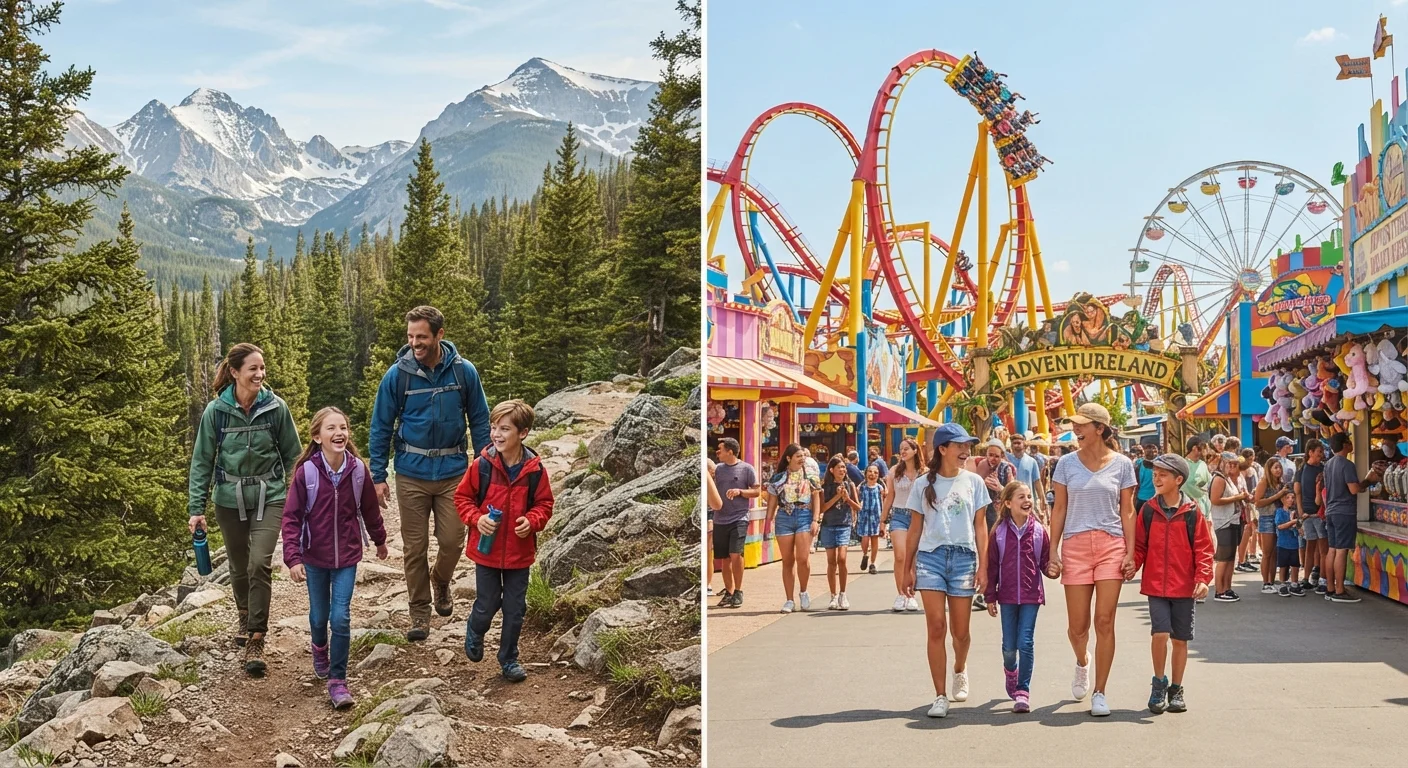
The open-ended, low-cost outdoor experience.
Best for: Families who want flexible itineraries, physical activity, and significant cost savings over several days.
Option B
Theme Parks
The structured, high-stimulation entertainment destination.
Best for: Families with children who have specific ride or character interests and a defined budget set aside for a concentrated splurge.
If your family is watching spending closely
National Parks
Entry, camping, and self-catered meals keep daily costs well below what a theme park day typically runs. The America the Beautiful annual pass covers entry at over 2,000 federal sites for one flat fee.
If your kids are under 8 and driven by characters and rides
Theme Parks
Young children respond strongly to the structured, sensory-rich environment theme parks provide. A short, focused visit can deliver exactly what they want without the physical demands of trail hiking.
If you have a mix of ages including teenagers
National Parks
Older kids and teens generally get more from the freedom, scale, and variety of national parks than from a theme park day, where lines can feel like wasted time.
If you have only two or three days to spare
Theme Parks
Theme parks are designed for short, dense visits. National parks reward slower trips; two days is often not enough to see the park and recover from travel.
If building outdoor skills and family connection matters to you
National Parks
Hiking, wildlife observation, and camping together build shared experiences that tend to stick with children longer than a single theme park day.
What you actually pay at each type of destination
The sticker price gap between national parks and theme parks is wide. A standard vehicle pass to a major national park runs around $35, and the America the Beautiful annual pass costs $80 for unlimited entry across federal lands for a full year. A family of four at a major theme park, by contrast, can pay $400 to $600 or more in admission alone before the gates open.
That gap shrinks when you add the full picture. National park camping ranges from free dispersed sites to $30 or more per night at popular campgrounds, many of which require reservations months in advance. Food at national parks is mostly whatever you bring or cook yourself, which helps. Gear costs for first-time campers can be a real barrier, though gear can often be rented or borrowed.
Theme park costs layer on quickly. Parking, in-park meals, merchandise, and ride photo packages all hit your budget after you have already paid for admission. Some parks charge separately for premium experiences or line-skipping options. Hidden costs at both types of destinations follow predictable patterns once you know where to look, but first-time visitors at either type often underestimate the total.
| Criterion | National Parks | Theme Parks |
|---|---|---|
| Entry cost (family of 4) | $35 per vehicle or $80/year pass | $400-$600+ for one day |
| Food costs | Self-catered; low if you plan | In-park dining is expensive |
| Accommodation | Camping $0-$35/night; lodges vary | Nearby hotels range widely |
| Planning complexity | High: permits, weather, gear | Moderate: tickets and timing |
| Best age range | 6 and up; younger with care | 3 and up; height restrictions apply |
| Trip length sweet spot | 4 to 7 days minimum | 1 to 3 days |
| Weather dependency | High: trails and roads can close | Low: mostly weatherproof |
| Upsell pressure | Low | High: add-ons at every turn |
How kids actually experience each option
Children under 6 often respond more enthusiastically to theme parks. The visual density, characters, and short-burst rides match short attention spans. Height restrictions matter here: a child who cannot ride most attractions at a major park will have a frustrating day regardless of cost.
School-age children and teenagers tend to get more from national parks over time. Trails with a payoff (a waterfall, a summit, a wildlife sighting) hold attention in ways that ride queues do not. The Junior Ranger program, offered at most national parks, gives kids a structured activity that moves at their pace. Many families find that children talk about a bear sighting or a canyon hike for years, while the memory of a specific theme park ride fades faster.
Physical stamina is a real variable. A 5-mile trail that looks manageable on paper can become a problem with a tired 4-year-old. National parks are not inherently more enriching than theme parks for every family; the fit depends on your children's ages and what they find genuinely rewarding.
Logistics, planning, and what can go wrong
Theme parks are logistically predictable. You buy tickets, arrive, and follow signs. The infrastructure exists to move large crowds efficiently, and the experience is nearly the same regardless of weather (most parks have indoor attractions). Crowd management matters: popular parks on holiday weekends mean very long lines, and visit timing affects the day more than most first-timers expect.
National parks require more variable planning. Campsite and permit reservations at popular parks, such as Yosemite or Zion, often open months ahead and fill within hours. Weather changes trail conditions significantly. Roads can close seasonally. If you are driving to a park, planning the road trip itself becomes part of the trip rather than an afterthought.
Accommodation outside the park boundaries varies widely in cost and quality. On-site lodges at popular national parks can be expensive and booked far in advance. For families open to camping, the range of outdoor stay options from tent camping to cabin rentals affects both budget and comfort significantly.
Which one actually delivers more for the money
For most budget-focused families visiting for four or more days, national parks return more per dollar spent. Entry is low, the experience scales with effort rather than spending, and there is no mechanism pushing you to upgrade or add on. The America the Beautiful pass pays for itself after two park visits.
Theme parks deliver concentrated value in a short window, particularly for younger children with specific interests. The problem is that the cost is front-loaded and largely fixed. Spending more does not dramatically improve the day once you have the basics covered, but spending less (skipping meals, ignoring add-ons) often does diminish it.
Families who want variety without high admission costs have real alternatives. Free and low-cost family attractions across the US can anchor a trip that mixes outdoor time with museum visits or historic sites, spreading the budget further than either a national park or theme park visit alone.
Neither option is universally better. The question worth asking is whether your family leaves a vacation feeling it was worth what you paid, not just whether it was objectively cheap. For many families, that answer will differ depending on the ages of the children and how everyone defines a good day outdoors.